
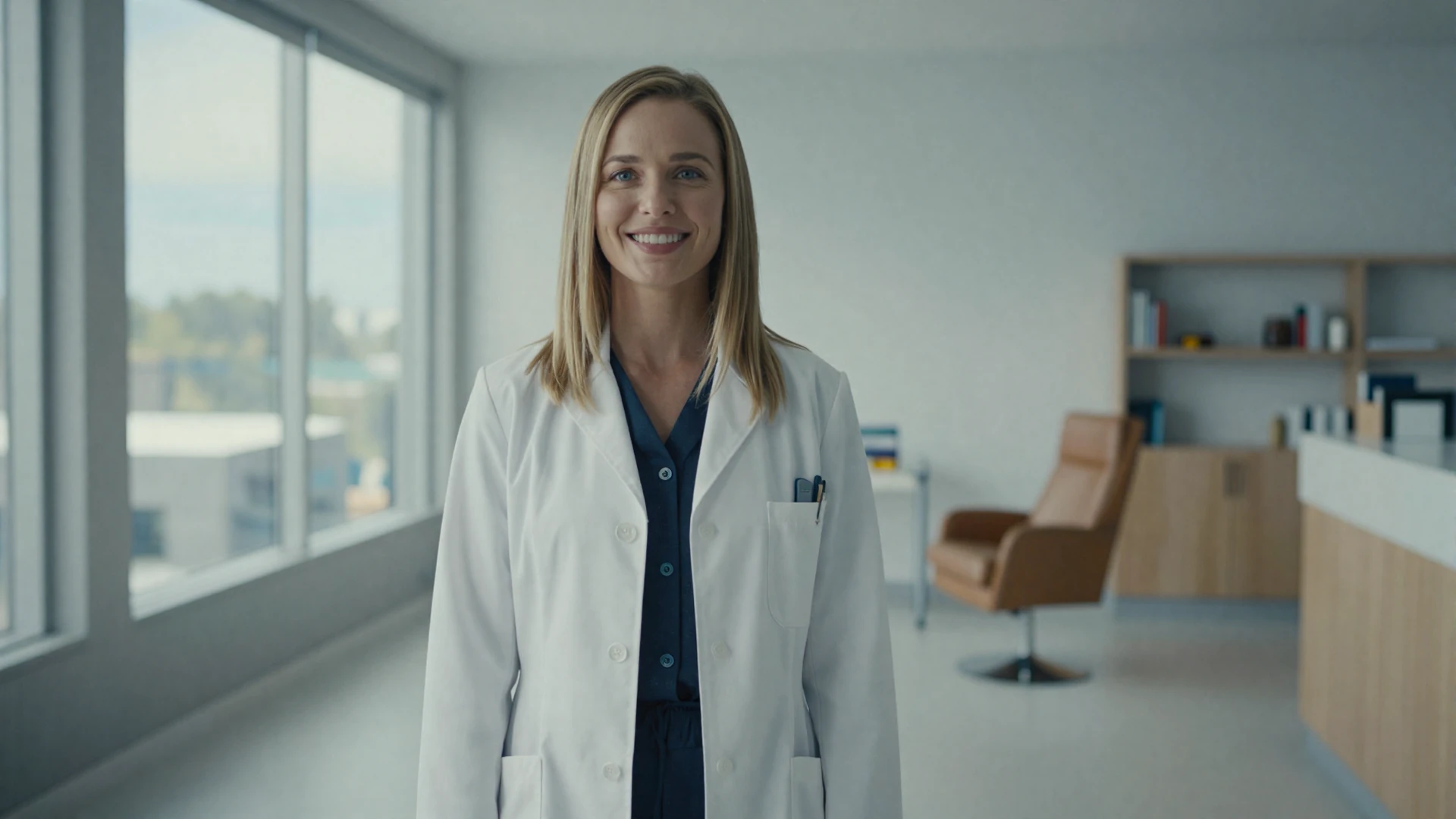
Nurse Practitioner Dating: Meet Independent Women in Advanced Practice
Nurse practitioners are the bridge between nursing and medicine - licensed to diagnose, prescribe, and treat patients independently in many states. With earnings of $110,000-$130,000 and a master's-level education, NPs represent some of the most qualified, autonomous women in healthcare. If you're looking for a partner who combines clinical expertise with genuine compassion, nurse practitioner dating on NextDoctorDate connects you with verified NPs ready for a serious relationship.
Free to join · Verified profiles · Serious relationships only
Why NPs Bring Independence to Relationships
Nurse practitioners occupy a unique space in healthcare - they have the clinical authority of a physician in many practice areas, combined with the patient-centered empathy that defines nursing. That combination shapes who they are as partners: decisive, knowledgeable, and deeply caring. Here's what makes dating a nurse practitioner a distinctly rewarding experience.
Clinical Autonomy Means Confidence
In 27 states, nurse practitioners have full practice authority - meaning they can diagnose conditions, order tests, and prescribe medications (including controlled substances) without physician oversight. This level of professional independence attracts women who are self-directed, confident decision-makers. When you date an NP, you're with someone who takes ownership of her work and her life. She doesn't wait for permission; she assesses, decides, and acts.
That autonomy carries into relationships. NPs are accustomed to making high-stakes decisions under pressure - choosing treatment plans, managing complex cases, and leading care teams. In a partnership, this translates to someone who communicates directly, takes initiative, and doesn't shy away from difficult conversations. If you value a partner who's equally capable of planning a weekend getaway and navigating a life crisis, a nurse practitioner is an exceptional match.
Many NPs also run their own clinics or work in private practice, meaning they understand business, finance, and leadership beyond clinical care. This entrepreneurial mindset is attractive for ambitious men who want an equal - not a dependent.


Master's-Level Education
Nurse practitioners hold either a Master of Science in Nursing (MSN) or a Doctor of Nursing Practice (DNP) - typically 6-8 years of post-secondary education. That academic rigor means you're dating someone who values learning, sets ambitious goals, and follows through on multi-year commitments. The same persistence that gets an NP through graduate school shows up in how she approaches relationships.

Compassion Meets Authority
NPs are trained in the nursing model first - which means patient-centered, holistic care - then build advanced clinical skills on top. The result is a partner who leads with empathy but backs it with expertise. She can have a difficult medical conversation one minute and a tender personal one the next, without losing her composure in either.

Financially Independent
With a median salary of $120,000, nurse practitioners are financially self-sufficient from the start of their careers. They don't need a partner for financial security - they want one for companionship, shared growth, and mutual ambition. If you're a man who's tired of being valued primarily as a provider, dating an NP means being valued for who you are, not what you earn.

Leadership in Healthcare
Many NPs advance into leadership roles - managing clinics, supervising nursing staff, or shaping healthcare policy. This leadership experience means she's comfortable taking charge, delegating, and solving complex problems. In a relationship, you get a partner who contributes equally to decision-making and doesn't shy away from responsibility.
Balancing Autonomy and Shift Work
Nurse practitioners work across a wide range of settings - outpatient clinics, hospitals, urgent care centers, and private practices - and their schedules vary accordingly. Understanding how an NP's schedule shapes her availability is essential for building a strong relationship.
Most NPs in outpatient or clinic settings work standard daytime hours, typically Monday through Friday, with occasional evening or Saturday clinics. This is one of the most relationship-friendly schedules in healthcare - predictable, stable, and largely free of overnight shifts. If your partner works in a primary care clinic, you can expect regular dinner dates, weekend plans, and a shared social calendar that looks much like any professional couple's life.
However, NPs in hospital settings - particularly those in emergency departments, intensive care units, or surgical services - may work 12-hour shifts, rotating schedules, or on-call rotations. These schedules mirror those of registered nurses but with added responsibility for clinical decision-making. The trade-off: compressed work weeks mean three or four days off in a row, which can actually create more quality time than a traditional 9-to-5 schedule.
The Bottom Line on NP Schedules
Roughly 65% of nurse practitioners work in outpatient settings with predictable daytime hours (AANP, 2024). For men who value routine and shared weekends, clinic-based NPs offer one of the most compatible schedules in all of healthcare. Hospital-based NPs offer more intensity but also longer stretches of time off. Either way, NextDoctorDate's shift-sync matching tool helps you find an NP whose schedule aligns with yours.
One important consideration: even with a predictable schedule, NPs carry significant clinical responsibility. A nurse practitioner who manages 20-30 patients per day comes home mentally taxed. The best partners understand that decompression time after a shift isn't rejection - it's recovery. Giving her 30 minutes to unwind before diving into evening plans makes a measurable difference in relationship quality.
Compared to physicians, who may work 60-80 hours per week during residency and carry $250,000 in student debt, NPs typically work 36-40 hours per week with a more manageable educational debt load ($40,000-$80,000 for an MSN). This means NPs often reach financial stability and work-life balance earlier in their careers - a significant advantage for relationship planning, whether that means buying a home together, starting a family, or simply having time to travel.
Financial Outlook for Nurse Practitioners
Nurse practitioners are among the highest-earning nursing professionals in the United States, with salaries that rival some physician specialties. Their earning power, combined with lower educational debt than physicians, makes NPs financially attractive partners who reach stability earlier in their careers.
Salary data: Bureau of Labor Statistics Occupational Employment Statistics 2024; NP workforce data: American Association of Nurse Practitioners 2024
What This Means for Your Relationship
An NP's financial profile creates a strong foundation for partnership. With a six-figure income and manageable debt, nurse practitioners typically reach positive net worth by their early-to-mid thirties - earlier than most physicians. This means shared financial goals like buying a home, investing, or starting a family can happen on a realistic timeline.
NPs also tend to be financially literate. They've navigated insurance reimbursement, billing codes, and practice management - skills that translate into practical household financial planning. Many NPs supplement their income with locum work, telehealth shifts, or their own clinics, meaning they understand multiple income streams and entrepreneurial finance.
Salary Growth Potential
NP salaries vary by specialty and setting. Psychiatric NPs and certified nurse anesthetists (CRNAs) earn at the top of the range, while family practice NPs cluster around the median. NPs in metropolitan areas like San Francisco, New York, and Boston routinely earn $140,000-$160,000. With 5-10 years of experience, many NPs move into leadership or specialized roles that push earnings above $150,000.
For a comparison with the highest-earning nursing specialty, explore our nurse anesthetist dating page, where CRNAs earn $200,000 or more.
Compatibility with Nursing and Physician Assistant Roles
Nurse practitioners sit at the intersection of nursing and medicine, which means they share professional DNA with both registered nurses and physician assistants. Understanding these overlaps helps you appreciate what makes an NP unique - and where to look if an NP's profile resonates with you.
NP vs. Registered Nurse
The core difference is scope of practice. Registered nurses provide hands-on patient care, administer medications, and monitor conditions - but they work under a physician's or NP's direction. Nurse practitioners, by contrast, diagnose, prescribe, and manage treatment plans independently. In a relationship, this means an NP brings more decision-making authority and a broader clinical knowledge base to everyday life.
NP vs. Physician Assistant
NPs and PAs are often confused, but their training philosophies differ. NPs are educated in the nursing model - holistic, patient-centered care - while PAs are trained in the medical model, which mirrors physician training. Both diagnose and prescribe, but NPs tend to emphasize prevention and patient education, while PAs often work more closely with physicians in surgical or specialty settings. For relationships, both offer similar income and autonomy, but NPs may bring a more nurturing communication style.
Frequently Asked Questions About Dating Nurse Practitioners
Everything you need to know about meeting, dating, and building a relationship with a nurse practitioner - from education timelines to how their schedule affects dating. Straight answers, no fluff.
A nurse practitioner is an advanced practice registered nurse (APRN) who has completed a master's or doctoral degree (MSN or DNP) and holds national certification in a specialty area. Unlike registered nurses, NPs can diagnose conditions, order and interpret diagnostic tests, and prescribe medications - including controlled substances - independently in 27 states. Registered nurses provide direct patient care under the direction of a physician or NP. In dating terms, an NP brings more clinical authority, higher income ($110K-$130K vs. $75K-$95K for RNs), and typically a more predictable outpatient schedule.
Becoming a nurse practitioner requires 6-8 years of post-secondary education: a 4-year Bachelor of Science in Nursing (BSN), followed by 1-2 years of clinical nursing experience, and then a 2-3 year Master of Science in Nursing (MSN) or Doctor of Nursing Practice (DNP) program. Many NPs complete their training by age 26-28, meaning they reach career and financial stability earlier than physicians, who typically finish residency in their early-to-mid thirties. This earlier stability often translates to more time and energy for relationships.
Yes - nurse practitioners generally enjoy better work-life balance than physicians. Approximately 65% of NPs work in outpatient settings with standard daytime hours, Monday through Friday. Even hospital-based NPs typically work 36-40 hours per week, compared to the 60-80 hours common during physician residency. The compressed 12-hour shift model (three shifts per week) is also available, giving NPs four-day weekends. This flexibility makes NPs some of the most schedule-compatible healthcare professionals to date.
Yes, nurse practitioners have prescriptive authority in all 50 states. In 27 states, NPs have full practice authority, meaning they can prescribe medications - including Schedule II controlled substances - without physician supervision. In the remaining states, they prescribe under collaborative agreements with physicians. This clinical independence is one of the defining features of the NP role and reflects the high level of trust and responsibility these women carry in their professional lives.
Dating a nurse practitioner means being with someone who combines medical expertise with genuine empathy. NPs are trained to listen carefully, communicate clearly, and approach problems holistically - skills that translate directly into strong relationship communication. They're financially independent (median salary $121,610), professionally autonomous, and typically have more predictable schedules than physicians. The main adjustment is understanding that after a day of managing 20-30 patients, she may need decompression time before engaging socially. Partners who respect that transition tend to build the strongest relationships.
The most effective way to meet single nurse practitioners is through a specialized medical professional dating platform like NextDoctorDate, where every NP profile is verified and you can filter by healthcare profession. Outside of dedicated platforms, NPs frequent coffee shops near medical centers, attend healthcare conferences, and participate in continuing education events. However, approaching women at their workplace is generally inappropriate. NextDoctorDate connects you with NPs who have already indicated they're open to dating - no cold approaches needed.
Explore More Medical Professional Dating
Nurse practitioners are part of a broader ecosystem of healthcare professionals. If you're drawn to the caring nature of nursing or the clinical versatility of physician assistants, explore these related pages to find the best match for your lifestyle.
Related Healthcare Dating Pages
If the nurturing, patient-centered approach of nurse practitioners resonates with you, explore nurse dating for the largest community of caring healthcare women, or physician assistant dating for a similar level of clinical autonomy with a medical-model training background. For the highest-earning nursing professional, visit our nurse anesthetist dating page.
Explore Physician Specialties
Nurse practitioners often collaborate with physicians across specialties. If you're also interested in dating a physician, browse our doctors dating hub covering 22 medical specialties - from internists to psychiatrists. You can also read our blog post on how medical specialties influence dating compatibility to understand which career paths align with your relationship goals.